Across the world, clinics are shifting to self-service scheduling. Patients don’t want to call. They want to open the site, pick a time, and get it done. If your clinic doesn’t offer that — they’ll find one that does.
This is how it works in Alpaca
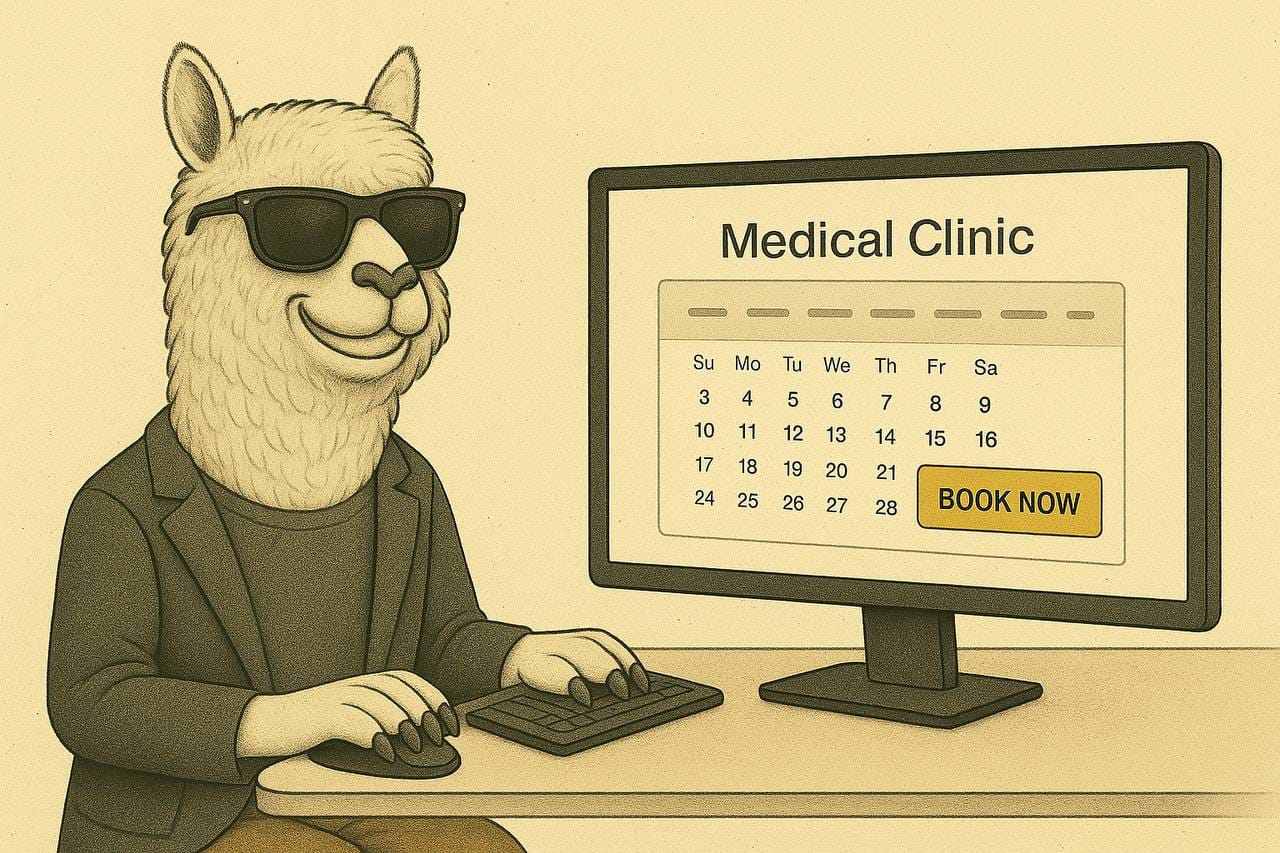
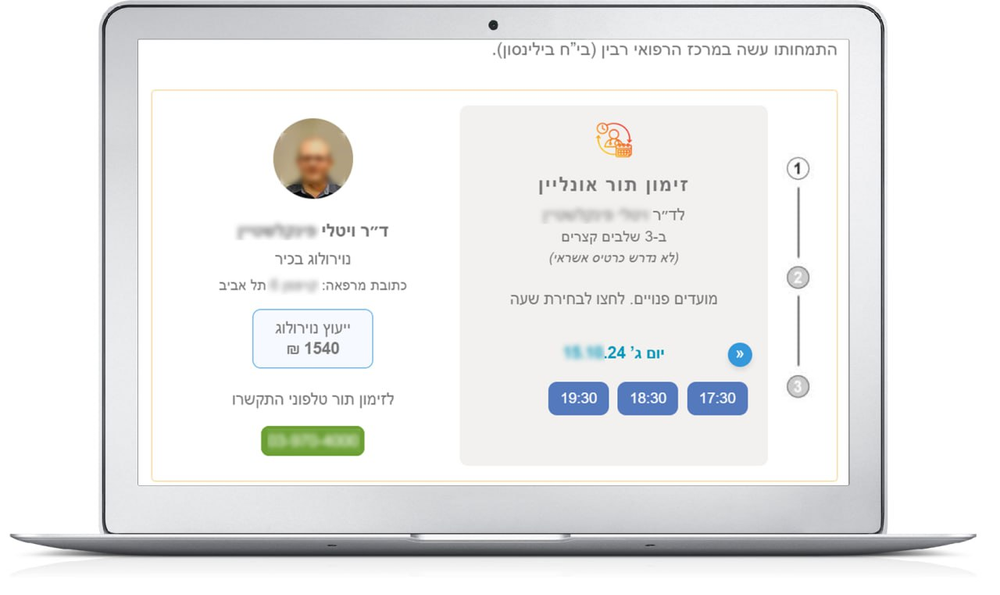
Your site shows real-time available slots. A patient sees the schedule, chooses a doctor, service, and books.
Instantly. No forms. No waiting. No call-backs.
And the best part?
The patient lands right into your Alpaca system — with full history, follow-ups, and communication tools ready.
Patients actually prefer it
We’ve seen it over and over: 30–70% of bookings at Alpaca clinics come through online scheduling. Why?
People are busy. People are introverts. People don’t want to explain their issue over the phone.
They’d rather click than call.
It boosts conversion
Let’s say someone visits your website just to check services. If they see open slots right away — they’re far more likely to act. No need to “think about it,” “check later,” or “call tomorrow.”
One click → booked.
It saves you money
Less calls = fewer admins = more focus.
Your team spends less time on the phone and more time on care.
And your patients? They get the experience they expect — modern, fast, easy.
What about cancellations and no-shows?
Clinics often worry: what if people book and don’t show up? What if competitors abuse the system?
Here’s the truth: across tens of thousands of bookings in multiple countries, we’ve seen no such issues.
In fact, the cancellation and no-show rate is even lower than for phone bookings. Why? Because when a patient books on their own terms, they’re more likely to commit.
Final thought
Online booking is no longer a “nice to have.” It’s expected. If you don’t have it, you’re losing patients. If you do — and it’s fully integrated into your system like in Alpaca — you win on every front: experience, efficiency, and retention.
Want to see how it looks on your site? We’ll show you. No chaos. Just care.
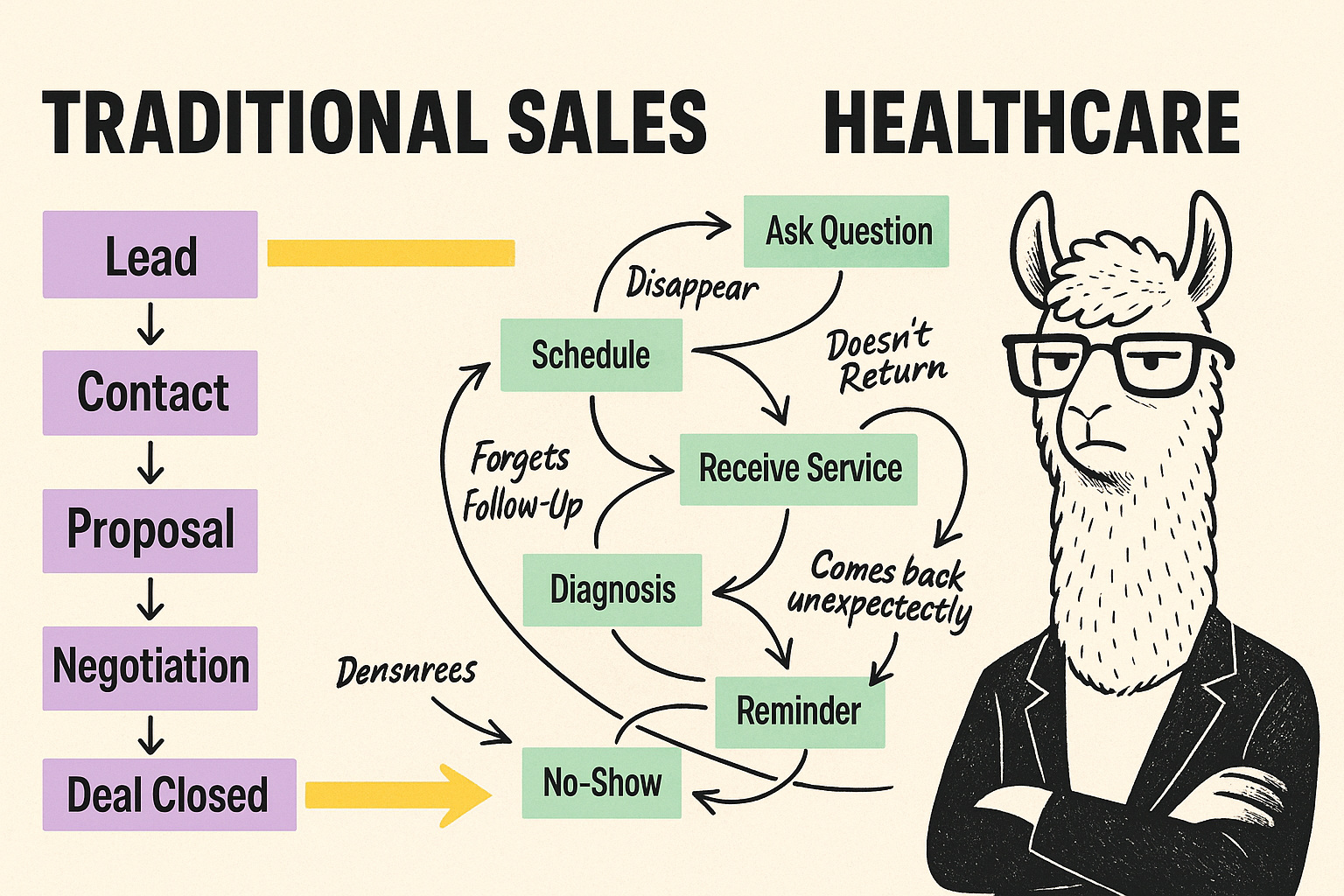
Most CRMs are built to sell products. One item, one sale, done. But clinics don’t sell TVs. They care for people. And people come back, ask questions, cancel, rebook, get results, need help.
That’s why traditional CRMs don’t work in healthcare.
Medical business in not about one deal.
What is Touch?
Touch is a complete record of every interaction with your patient. Every call, message, booking, follow-up — it’s all saved, automatically.
How does it work?
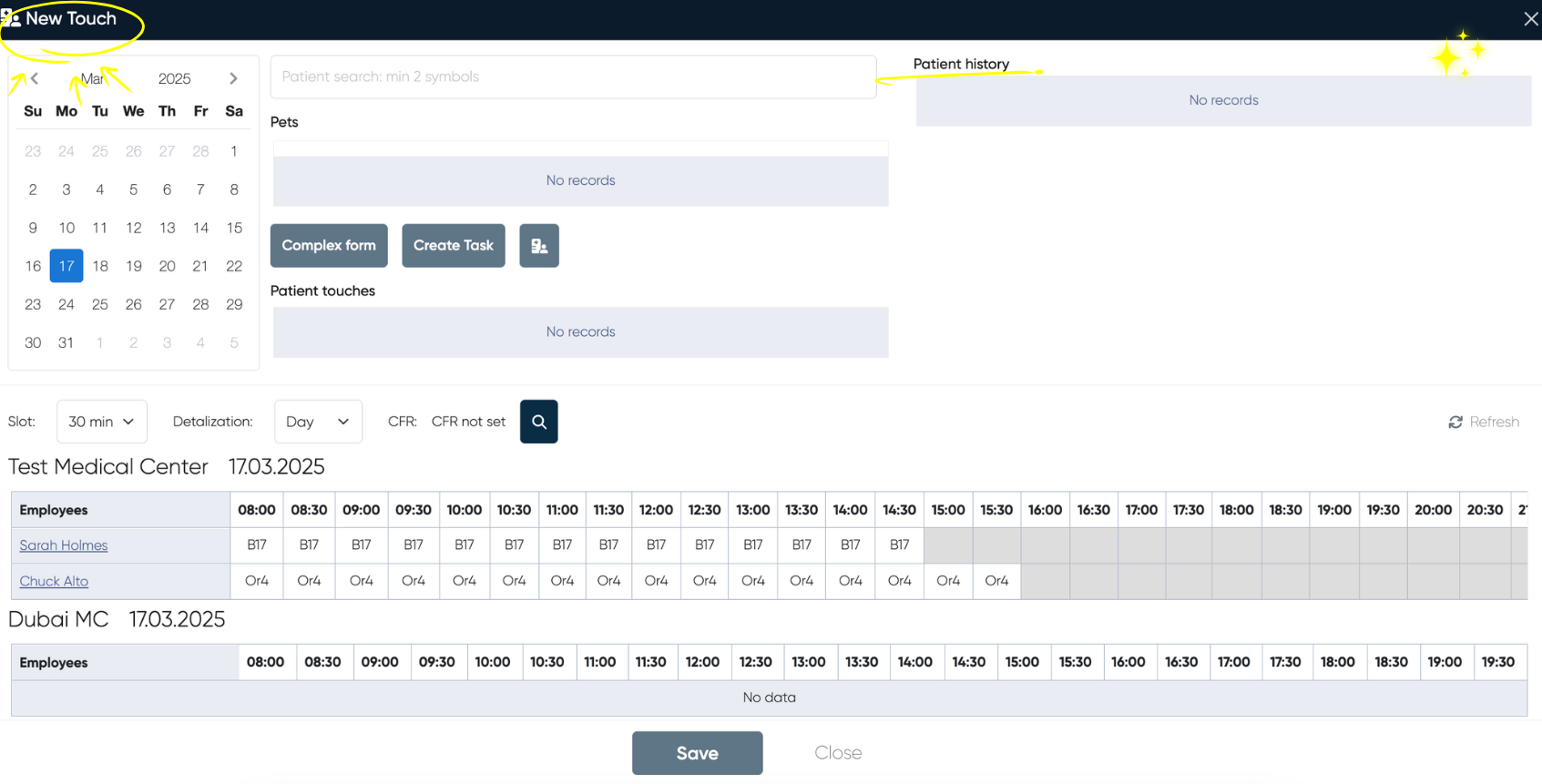
New Touch
A patient calls or messages → Alpaca opens touch
You see everything they did before:
Past visits,
Previous conversations,
Any pending tasks or follow-ups.
You can act right away:
Book an appointment,
Send a document,
Assign a task to a doctor,
Or just reply.
And every action becomes a Touch. It’s logged, visible, and linked to that patient.
Example:
Monday: Patient calls, asks about gastro check-up → Alpaca logs the call.
Tuesday: Admin sends a message with available slots → logged as Touch.
To say the truth, I was a bit frustrated to hear this question at first. I came from the market, where we only worked with private patients and private hospitals, and no one really asked this question, because it was obvious. But here in Israel, and in most European countries, this question still sounds reasonable. Most of the market is insurance based, and only tiny part is private.
I see here the same trends I saw in several countries, with more developed private market. Due to high level of insurance / state healthcare it’s moving slower, but still it does move and enlarge, and soon we’ll see more players here. So, I’ve been working on private market for over 15 years, and saw it evolving, and I guess I could tell a tip or two about what’s going to happened next.
In this article I’ll start with the very beginning – why do private patients exist at all? What makes them pay real money when they can just go to state hospital “for free”?
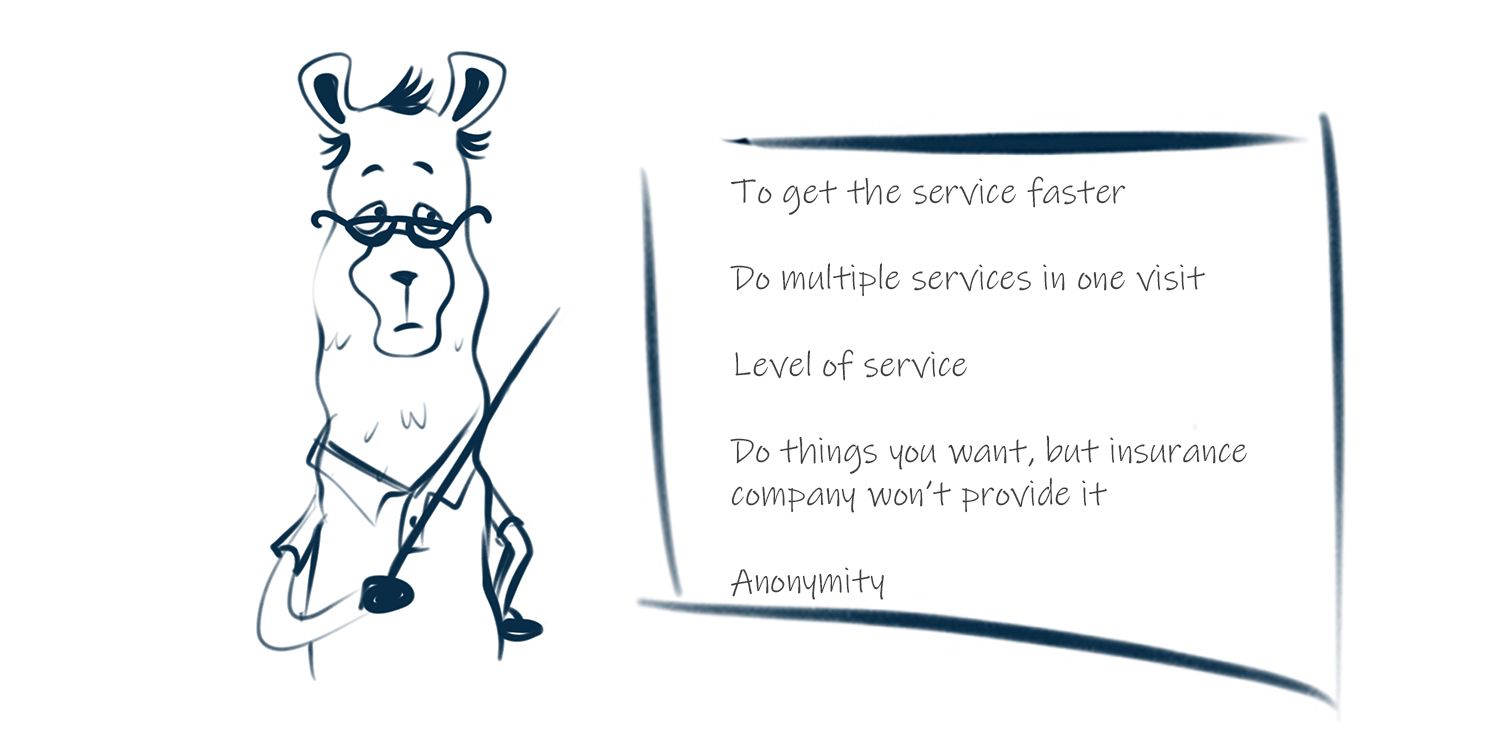
Here is a breakdown, some sort of TL/DR for you:
In general – private healthcare always covers the gaps in insurance or state one for those who are willing to pay for speed and comfort.
To get the service faster
We all know, that it may take months to get to a specialist in קופת חולים. For example, we had to wait for 4 month to get to children’s psychologist, and we were lucky to get it this fast.
If it’s not urgent, you have to wait for unreasonable time in most cases. And urgent is quite a tricky thing – it may be not life-threatening, but still be a real pain in the <name the part of the body>. Waiting also can lead to more severe consequences, and certainly decrease your comfort.
And yes, people are willing to pay more for it. The higher level of income they have, the more they are willing to do so. For example, they pay additional USD 1 000 for a flight with better carrier and in daytime, instead of flying 3 connections with lowcoster in a total 20 hours.
Usually, it’s a question of a habit. On the emerging market (like Israeli) it may sound a bit difficult for a patient to start thinking this way, but in time it will develop into a habit, and they will check private options the second they got info that they have to wait for months.
Do multiple services in one visit
Imagine, that you want to make a complex diagnostics, or prepare for surgery. You may need blood tests, several ultrasounds, and couple consultations. In state hospital it may again take you months. It’s hard to get even one slot (תוֹר), and it would be several times harder to get 10 slots for 1 or two days, to make it all at once.
Back in the days we were able to provide a complex check-up for children (7 specialists, lab tests, 3 ultrasounds, ECG, EEG) in one day, sometimes in two, and people were paying for it 1,5 average wages in the country. Because otherwise they would have to spend about a month to fulfill it, take leaves at work etc.
Of course, this level is necessary for a market with high level of competition, in Israel it would be next to impossible (for now). But with the evolution of the market it would be more and more important. Now we in Israel are mostly on previous stage (get specific service faster), but we will soon migrate to this stage, where private medical facility would be valuable for ability to provide multiple services in one day.
Yes, healthcare here and in Europe/US is quite expensive, but either is time. And people are willing to pay for it.
Level of service
Service is not a big thing here in Israel right now, and most people don’t see any problem here, because they are used to it.
But there are what they call “high net worth individuals” – not disgustingly rich, but well off. Those, who have been to places and countries with high level of service across the world, and they appreciate it. And for them high level of patient service is a thing they are willing to pay for, because in their mind it costs more then you ask for it.
If you often travel to five star places, and fly business class in top airlines, you don’t want to sit and wait in public hospital around the corner, waiting for the queue. You want patient relations managers, modern apps, and the whole system of treatment that is patient-centric.
It’s not a big market, but, on the other hand, the competition is also very low. Of course, those guys can fly to Charité, and make everything there, but if there would be an option to make it all on the same level here at home – they would be your loyal customers for years.
It is a long and bumpy road, and requires tremendous efforts, but first clinic, that would be able to provide world-class level of service in healthcare will get a jackpot.
Do something you want, but your insurance won’t cover it
It’s quite narrow audience, but it still exists. They want to get tests or diagnostics that is not recognized as necessary in insurance company, but they still wanna do it.
Some people are scared of cancer, and perform different tests couple times a year. Some are not satisfied with their practitioner telling them “you are ok” and want to be 100% sure. Some have a wild life and run STDs test every month. We’ve seen patients, for example, who are HIV-phobic, and get tested 6 times a year.
This audience is not strategic (like ones looking for complex treatment and service level), but still should be taken into account.
Anonymity
Patients all over the world don’t want to perform sensitive tests and consultations in state hospitals, where all their medical history will be recorded and shared in state level system.
STDs, infections, reproductive health, and mental health are most popular areas where patients seek anonymity. Again, it’s not a widest audience, but it has no place to go except private clinics.
Summary
I guess I’ve covered most of the reasons why patients come to a private clinic. I didn’t mention medical tourism, because it’s quite a different thing with it’s own laws. I also didn’t cover esthetics medicine and dentistry, they are special areas of healthcare, and we’ll talk about them in next articles.
The main idea is – even now private market is just emerging, it will be evolving, just like it did in other countries. And medical centers, that could get on top of this wave, will greatly benefit from it.
Manage Consent
To provide the best experiences, we use technologies like cookies to store and/or access device information. Consenting to these technologies will allow us to process data such as browsing behavior or unique IDs on this site. Not consenting or withdrawing consent, may adversely affect certain features and functions.
Functional Always active
The technical storage or access is strictly necessary for the legitimate purpose of enabling the use of a specific service explicitly requested by the subscriber or user, or for the sole purpose of carrying out the transmission of a communication over an electronic communications network.
Preferences
The technical storage or access is necessary for the legitimate purpose of storing preferences that are not requested by the subscriber or user.
Statistics
The technical storage or access that is used exclusively for statistical purposes.The technical storage or access that is used exclusively for anonymous statistical purposes. Without a subpoena, voluntary compliance on the part of your Internet Service Provider, or additional records from a third party, information stored or retrieved for this purpose alone cannot usually be used to identify you.
Marketing
The technical storage or access is required to create user profiles to send advertising, or to track the user on a website or across several websites for similar marketing purposes.