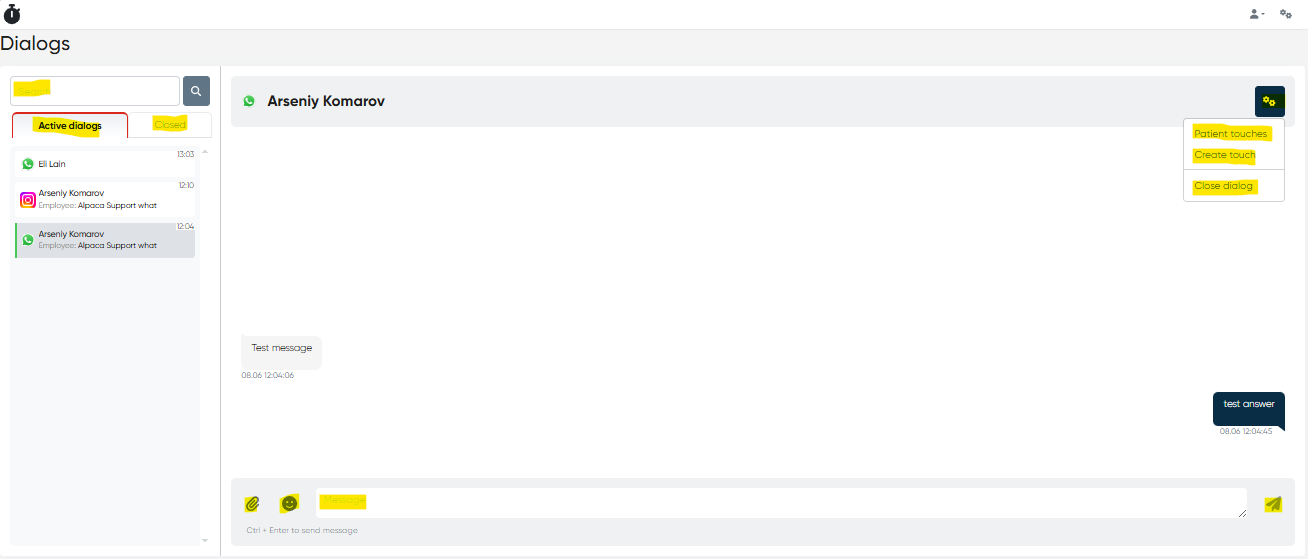
We’ve just made clinic–patient communication even simpler. Alpaca now integrates directly with official WhatsApp Business API providers. No Twilio, no extra hoops — just plug it in and start messaging.
Why this matters for clinics
Fast setup. Connect your WhatsApp account in minutes with your provider credentials.
All your messages in one place. Send and receive WhatsApp chats right inside Alpaca’s Dialogs section — complete with file sharing, emojis, and full history.
Multilingual by design. Patients can get messages in English, Russian, Hebrew, and more.
Total control. Template approvals and statuses sync automatically with WhatsApp, so you always know what’s live and what’s pending.
Build Once, Use Forever: Message Templates
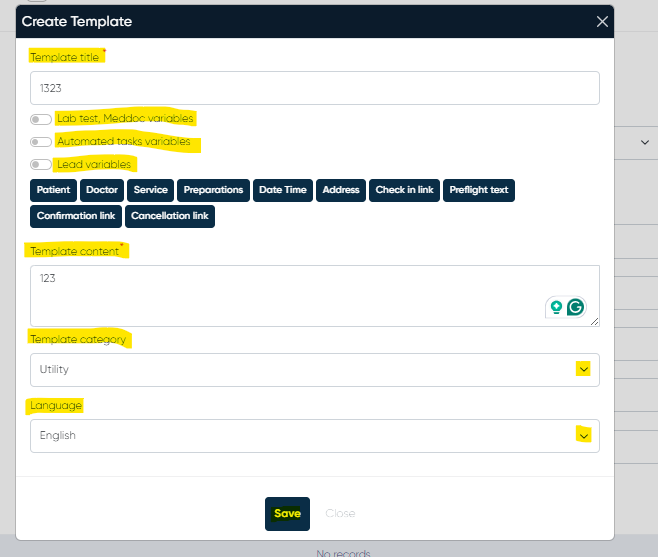
With direct integration comes the power of WhatsApp message templates — pre-approved by Meta, reusable, and ready to scale your patient communication.
What templates unlock for your clinic:
Reminders that get read. Appointment confirmations, lab results, invoices — straight into your patient’s WhatsApp.
Marketing that feels natural. Promotions, discounts, and offers delivered in the app patients already check dozens of times a day.
Personal touch at scale. Dynamic variables like {{patient}}, {{doctor}}, {{service}}, {{datetime}} keep every message human.
Multi-language support. Templates adapt to the patient’s language of choice.
Write it once, let Alpaca do the rest.
We know staying close to your patients is mission-critical. With Alpaca, you can now reach them directly on WhatsApp — fast, simple, and in their own language.
When I made Aliyah and first visited Maccabi, it felt like time travel — straight back to 2005. For someone who had built healthcare software for years, it was painful to see 30+ systems stitched together with a prehistoric EHR at the center. And that wasn’t just Maccabi — I soon realized this was the norm in clinics across Israel.
So I sold my company in Russia, poured everything into a new product built for Israel from scratch — modern stack, new logic, and one clear goal: fix healthcare IT.
But launching in a new country with zero connections is tough. Luckily, in the medical world, everyone knows someone Jewish — and that’s how I met Evgene Katsovitch, CEO of Tel-Aviv Medical Center (TAMC). If Guy Ritchie were casting Israeli clinic CEOs, Evgene would be “The Hammer.” He runs one of the biggest private outpatient clinics in Israel: 1,500+ m², 50 doctors, top-tier service, and style — a rare thing here.
They had already tried multiple CRMs and systems: Bitrix, cDocs, Google Calendar, Chat2Desk, iCount, Word… six tools for one workflow. Their team was juggling windows, copy-pasting data, manually emailing protocols. Onboarding took weeks. Errors were constant. And management had to glue together analytics from everywhere.
We couldn’t fix the Israeli licensing mess, but we could fix the tech.
In June 2023, we had a prototype, some ambition, and zero Hebrew (still working on that). Evgene saw potential and agreed to pilot Alpaca. We promised something new for Israel: an all-in-one platform with online booking, WhatsApp integration, full marketing analytics, and zero chaos.
Eight months later — and a nightmare of RTL support — we launched.
So, what changed?
Now, their call center sees everything in one window. We call it a Touch:
Patient info, history, schedule — all visible during the call.
Appointments, reschedules, cancellations, protocols — done in one click.
WhatsApp, lead forms, online booking — fully integrated.
Services linked to doctors, prices, rooms — no more mistakes.
Onboarding time dropped from 3 weeks to 2–3 days.
Calls now take half the time.
You no longer need a NASA engineer to pick up the phone.
For management?
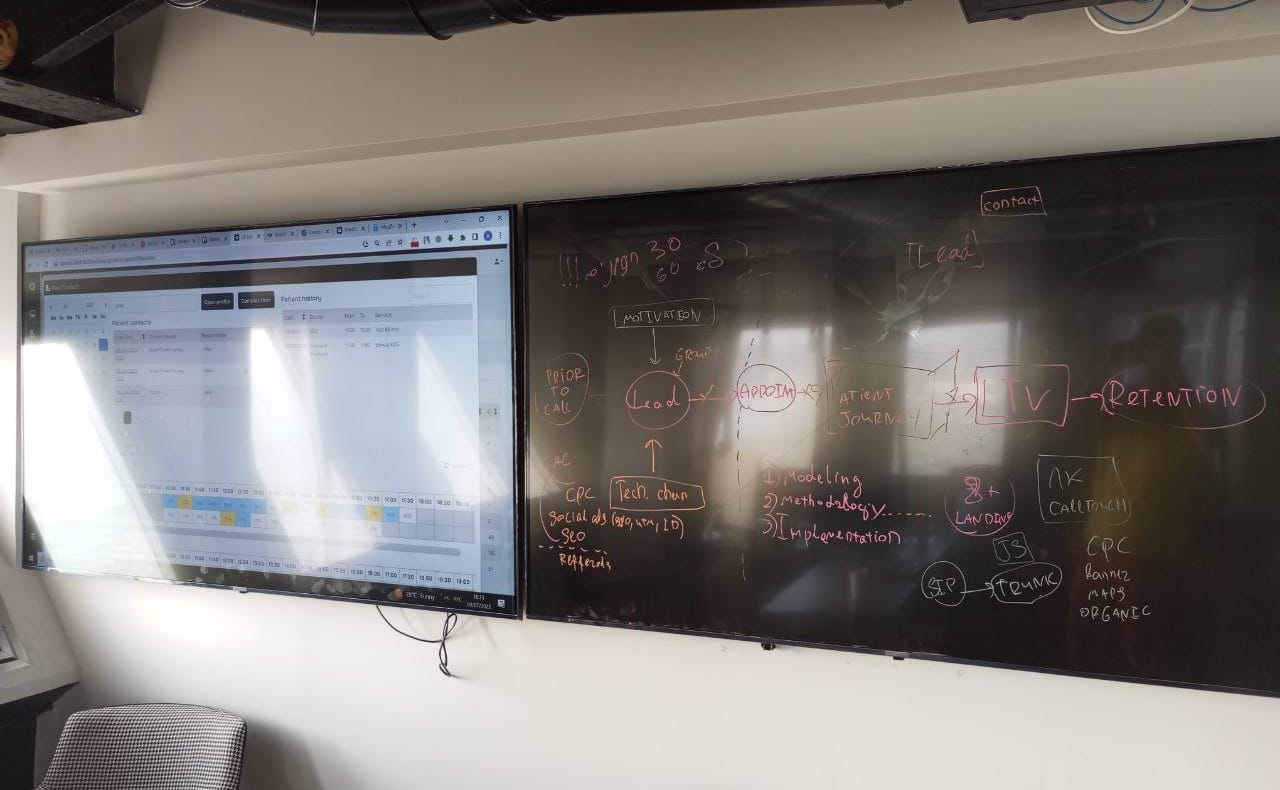
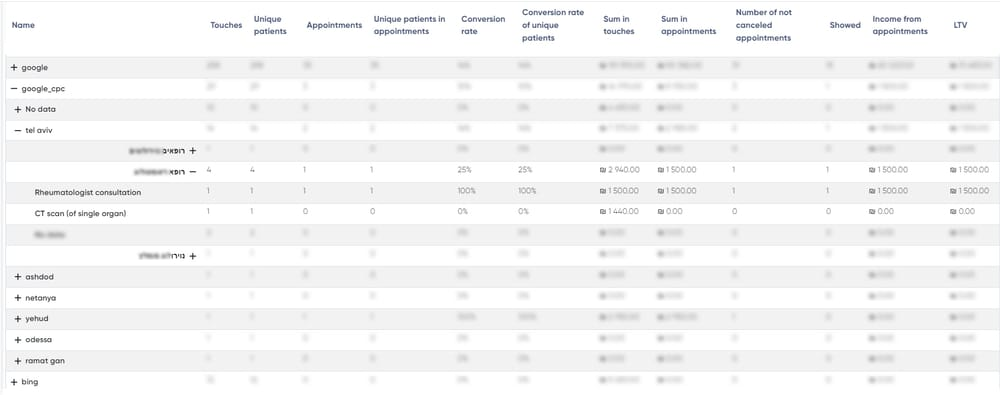
One dashboard. Real-time analytics. Leads, marketing, finances, clinical data — all in one place. No more jumping between Bitrix, iCount, Google Sheets, and prayer.
We call it meditational analytics — because watching your KPIs update every 30 seconds feels oddly soothing.
Oh, and cybersecurity? One system = fewer holes to patch, fewer APIs to expose, less stress.
TAMC believed in us when we had nothing but a vision. Today, they run on Alpaca — and we’re proud of what we built together.
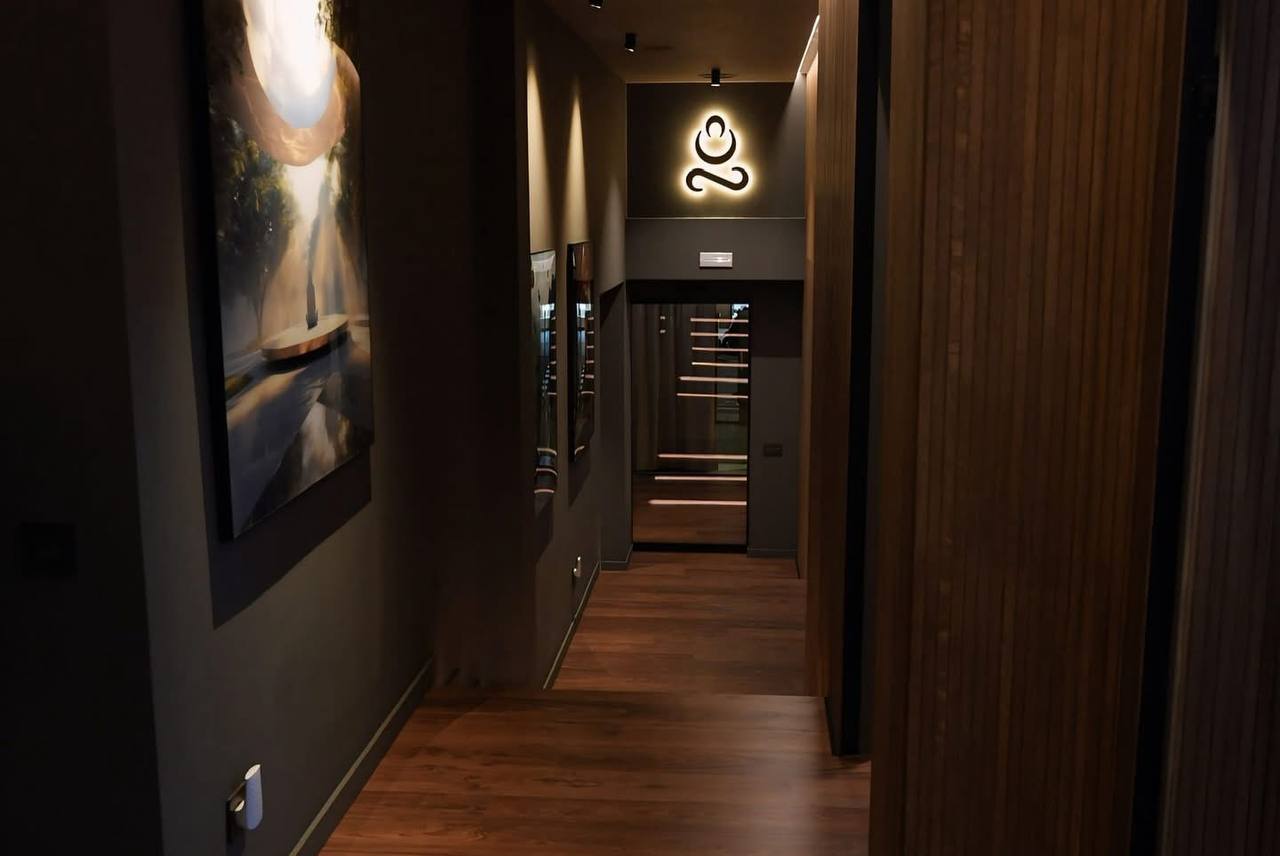
Sensor23 is a private clinic in Barcelona that modernized its mental health system with Alpaca EMR — treating the person, not just the symptom.
The clinic combines modern psychiatry, neuroscience, psychotherapy, IV therapy, physiotherapy, and wellness tools under one roof — offering a complete “reboot” for the nervous system.
The clinic is led by a multidisciplinary team of doctors, therapists, physiologists, and neurotechnologists. Their philosophy is simple: one patient — one team — one system.
One doctor, one tab. One patient, one team. One week to migrate. And a lifetime to benefit.
The Phylosophy behind the System
“We don’t treat symptoms. We treat people — body, mind, and soul. One patient. One team. Everything under one roof — in real life and in our system.”
That’s how Sensor23 describes their mission: an integrative clinic that rewires burnout, ADHD, anxiety, and even deep-spectrum autism. Patients come in, heal, bring cake, and say thank you. It works.
But behind the scenes, operations were… breaking. Not philosophically. Technologically.
The Pain: Bitrix and the mess it left
“We picked Bitrix. Huge mistake.”
Sensor23 didn’t want a bunch of platforms. They wanted one. One system for all. What they got was: everything and nothing.
The interface was clunky, notifications were lost, and the data structure felt more like a construction site than a clinic system. Every process — from intake to follow-up — required a workaround. Booking? Required third-party plugins. Scheduling? Needed medical calendar hacks. Online intake? Barely.
Their staff was overwhelmed. Their dev team — the ones who migrated the data later — were furious: “Who built this thing?”
No one could see the full patient journey. Data lived in silos. Clicks multiplied. And every department blamed the other.
The Shift: Alpaca in one week
“The migration took a week. The core switch — just two days. Then three more days checking what carried over.”
This wasn’t just a CRM swap. It was a shift in logic — a system that matches Sensor23’s way of thinking.
Alpaca immediately aligned with their integrative model: not ‘one doctor = one patient,’ but ‘one team = one case.’ Every clinician — psychiatrist, physiotherapist, psychologist, or IV nurse — accesses the same patient record. No silos. No handoffs.
What shocked the team most wasn’t just the speed. It was the clarity. “The first time we opened the new system, we saw everything we’d been trying to build for years — already there.” No checklists duct-taped to Excel. No jumping between tabs. No calling IT for exports. They could finally work like one organism.
“We’re not a service chain. We’re a system. We don’t rotate patients. We surround them.”
Customization: Demands met. Fast.
Sensor23 isn’t passive. They brought dozens of improvement requests to Alpaca within the first month. “At some point Alexey said, ‘Can you even count how much we’ve done for you?’”
From task logic to medical tabs, the Alpaca team responded fast. They created a flow with just two tabs per doctor. In some cases — one. Because when the issue is deep burnout or trauma, the last thing a doctor needs is a dashboard full of flags.
“Elena, our chief doctor, said: ‘Give me one screen. That’s all I need.’ And she was right.”
They restructured how cases appear. Rewrote intake logic. Hid everything non-essential. Created custom views for different specialists — so a psychologist sees mood charts, and an IV nurse sees hydration data, without distractions. No more “one size fits all.” Alpaca let Sensor23 shape their own tool — without needing to rebuild the system from scratch.
For once, software wasn’t in the way. It listened.
Doctors. Onboarded.
Forget weeks of training. Sensor23 onboarded its core medical team in two sessions. “One full-staff meeting. Two Zooms between Elena and Sharon. Then I shadowed each doctor one-on-one: ‘Show me how you’re working. Here’s what to change. Done.’”
Alpaca didn’t slow them down — it let them speed up without losing themselves.
Real impact: calm in the core
With Bitrix, Sensor23 was firefighting. With Alpaca, they’re building.
Now the entire clinic runs with shared knowledge, fast onboarding, clean analytics, and fewer operational detours. Sales are aligning. Data is flowing. Even the front desk feels the difference. Patients don’t repeat themselves. Doctors don’t waste time searching.
Decision-making is faster. Teamwork is smoother. And growth finally feels possible — not chaotic.
“There are still bugs — of course. But now it’s a living system. Not something we’re patching just to survive.”
Manage Consent
To provide the best experiences, we use technologies like cookies to store and/or access device information. Consenting to these technologies will allow us to process data such as browsing behavior or unique IDs on this site. Not consenting or withdrawing consent, may adversely affect certain features and functions.
Functional Always active
The technical storage or access is strictly necessary for the legitimate purpose of enabling the use of a specific service explicitly requested by the subscriber or user, or for the sole purpose of carrying out the transmission of a communication over an electronic communications network.
Preferences
The technical storage or access is necessary for the legitimate purpose of storing preferences that are not requested by the subscriber or user.
Statistics
The technical storage or access that is used exclusively for statistical purposes.The technical storage or access that is used exclusively for anonymous statistical purposes. Without a subpoena, voluntary compliance on the part of your Internet Service Provider, or additional records from a third party, information stored or retrieved for this purpose alone cannot usually be used to identify you.
Marketing
The technical storage or access is required to create user profiles to send advertising, or to track the user on a website or across several websites for similar marketing purposes.