Author: Alpaca Team

  • How to Scale Clinics Without Losing Control

    How to Scale Clinics Without Losing Control

    You’ve built one great clinic.
    It runs like a business, not a single practice.
    Everything’s structured — patients are happy, staff are efficient, numbers make sense.

    So what’s next?
    You open another one.
    And then another.

    Growth Feels Great — Until the Systems Don’t

    Before you know it, you’ve got a chain of clinics — and an IT disaster behind the scenes.

    Five, maybe ten different types of software.
    Different systems in every location.
    Each with its own logins, licenses, databases, and “local admins.”

    No unified patient base.
    No connected medical history.
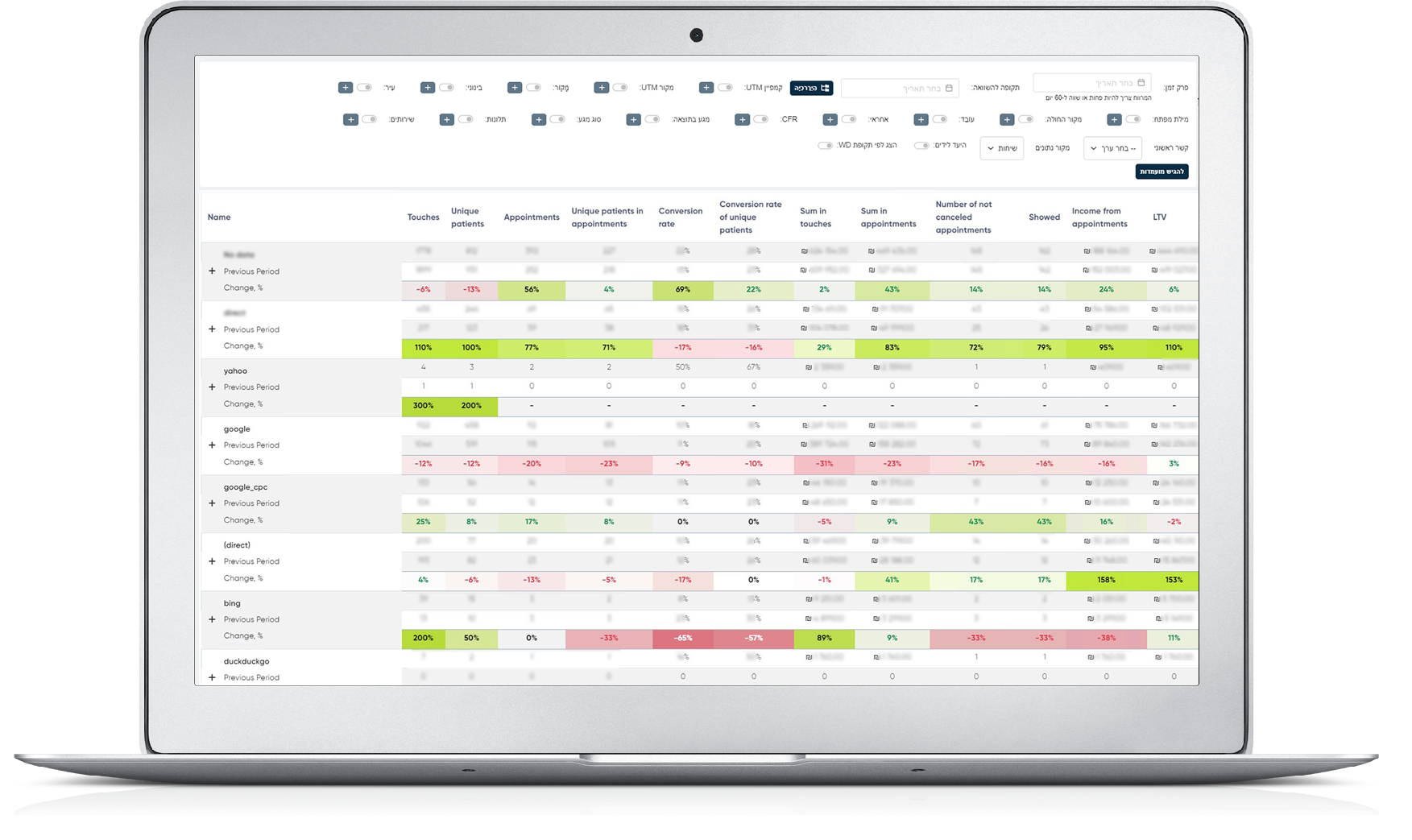
    No way to see the full picture of your business in one place.

    What started as a success story turns into an endless cycle of manual reports, duplicate data, and system chaos.

    The Worst We’ve Seen

    One of the groups we worked with had 17 clinics, including 4 full hospitals.
    Each one was running on its own database — completely separate.
    Seventeen silos of patient data, medical records, billing, and analytics.

    Managing that setup cost them a fortune — in time, money, and sanity.
    Their IT department spent more time syncing data than supporting staff.

    And that’s not unusual.
    That’s what happens when clinics grow faster than their systems.

    One Platform for All Your Clinics
    At Alpaca, we know what it takes to automate medical chains — because we’ve done it, repeatedly.
    Our platform was built for multi-location networks from day one.

    Here’s what that means:

    • One patient profile across all branches — unified medical history, visits, and results.
    • One CRM — all leads, calls, and messages shared across locations.
    • One interface — staff in every branch work in the same environment.
    • Advanced access rights — define what each team or doctor can see, by branch, role, or department.
    • Distributed infrastructure — your system stays fast and reliable even as you expand.
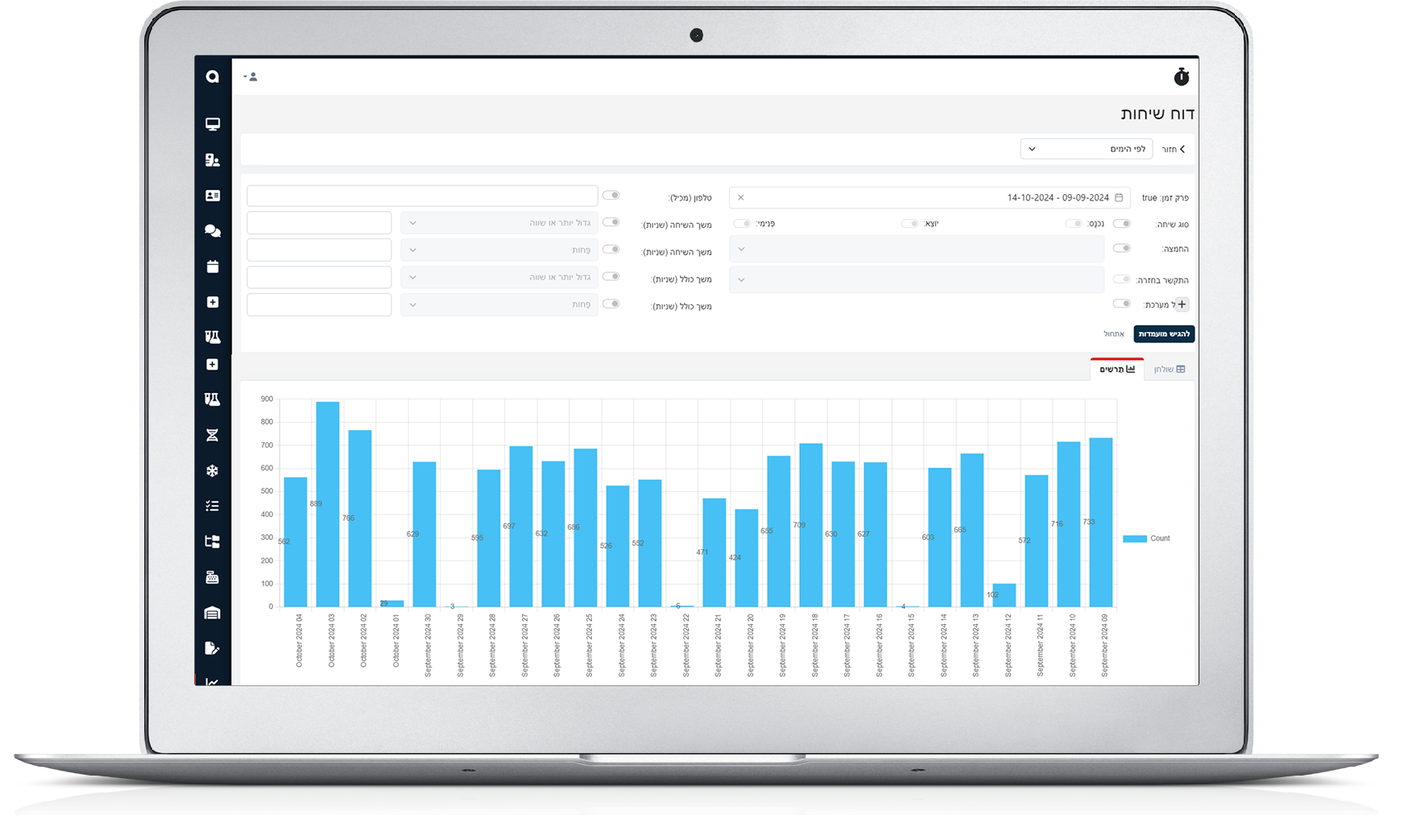
    • Chain-level analytics — instant visibility into revenue, performance, and patient flow across the network.

    Everything runs together — smoothly, securely, and at scale.

    We Unchain Clinics from Chaos

    Our team helps you migrate data from all your systems, unify patient records, and standardize workflows across every branch.
    We don’t just provide the software — we build the structure with you.

    From single clinics growing into networks, to established chains running dozens of sites — Alpaca helps turn fragmentation into clarity.


  • Why Traditional CRMs Don’t Work in Clinics

    Why Traditional CRMs Don’t Work in Clinics

    Almost every EMR today misses one crucial thing — a CRM.
    And in 2025, it’s nearly impossible to run a modern clinic without one.

    Every clinic needs structure for leads, follow-ups, recalls, reminders, and marketing automation.
    But traditional CRMs — the kind built for retail or real estate — simply don’t fit healthcare.

    Because Healthcare Isn’t a One-Time Sale

    Most CRMs were designed to sell TVs, cars, or subscriptions.
    Their logic is simple: lead → prospect → deal → done.

    But healthcare isn’t like that.
    No one wants to “close” a patient once.
    Good medicine is about relationships, not transactions.

    Your patients come back for months or years.
    They talk to reception, nurses, doctors, and managers.
    They need reminders, follow-ups, lab results, and a human touch.

    That’s not something a retail CRM can handle — no matter how you customize it.

    “Medical CRMs” Tried — and Failed

    Some companies tried to adapt general CRMs to healthcare.
    They added a few medical fields, changed a label or two — and called it a “medical CRM.”

    But there’s still one huge problem:
    Your schedule and medical records live somewhere else.

    That means your staff works in two or three systems at once:

    • One for leads and marketing
    • Another for appointments
    • A third for patient charts

    It’s a mess.
    The same person exists as a “lead” in one system and as a “patient” in another.
    Data gets fragmented. Messages get lost. Context disappears.

    That’s not a CRM — that’s chaos.

    The Solution: One System for the Entire Patient Journey

    That’s why we built Alpaca — a truly all-in-one platform where CRM, EHR, scheduling, billing, communication, and analytics live together.

    Everything happens in one window.
    Every team — front desk, marketing, medical, management — works in the same space, on the same data.

    • Leads and messages from calls, WhatsApp, Instagram, Facebook — all in one inbox.
    • Bookings directly linked to patient records and financial data.
    • Smart reminders and automations — recalls, follow-ups, and personalized care journeys.
    • Payments, insurance, and loyalty programs built right in.
    • BI analytics to see what really drives growth and retention.

    It’s not an app you add on top — it’s a platform that replaces everything disconnected.

    The Result

    One window.
    One source of truth.
    One team that finally works together instead of fighting software.

    That’s what a CRM for clinics should feel like — calm, connected, and intelligent.

  • Why It’s Time to Use an All-in-One System

    Why It’s Time to Use an All-in-One System

    For decades, medical IT has grown like layers of an ancient road.
    First came the Roman stones — early EHRs. Then the medieval cobblestone — LIS and RIS. Later, someone poured modern asphalt on top — CRMs, chat systems, marketing tools, and AI dashboards.

    Each layer made sense in its time.
    But together? They form a patchwork that’s hard to drive on.
    Clinics today run on a mix of systems that barely talk to each other. Each new tool promises efficiency — and adds another layer of complexity.

    The same thing happened in consumer tech.

    Remember when we used to carry a phone, a digital camera, a Palm Pilot, and a notebook — just to stay connected?
    Then the iPhone arrived.
    One device. One interface. One experience.
    Everything finally made sense together.

    Alpaca is the iPhone of clinic systems.

    All-in-one means one platform, one data, one interface, one support team.
    No integrations. No sync issues. No juggling multiple providers.
    Your CRM, EHR, LIMS, ERP, communication, billing — all in a single ecosystem that simply works.

    And yes — people often don’t believe it.
    They say, “That’s impossible. No one has unified all of this.”
    But we did.
    Alpaca has been running in real clinics for over two years, across six countries, handling everything from patient calls to IVF cycles.

    Change isn’t always easy — but this one is worth it.

    We’re not patching old systems.
    We’re replacing them.
    Completely.
    With something faster, simpler, and built for how modern healthcare actually works.

    Because when your technology stops fighting you, everything else moves smoother — your staff, your patients, your business.

    This is more than an update.
    It’s a small, steady, valuable revolution in healthcare IT.
    And it’s already happening.

  • What software really works for a medium-sized clinic?

    What software really works for a medium-sized clinic?

    If you run a single practice, you’re spoiled for choice.
    There are hundreds of apps designed for solo doctors — appointment schedulers, CRMs, even full EMRs that can run on a laptop.

    If you run a small clinic — three, maybe five doctors — there are also plenty of options.
    You can patch things together with a traditional CRM, Google Drive, and Word templates for notes.
    Not perfect — but manageable.

    But What If You Run a Midsize Clinic?

    If your clinic has 10 to 100 doctors, you’re in no man’s land.
    Too big for small-practice tools.
    Too small for hospital systems.

    The software for small clinics quickly hits its limits:

    • No role-based access control — everyone sees everything.
    • No central data structure — reports are built by hand.
    • No automation or task flows — just endless manual work.
    • No connection between CRM, medical records, and finance.

    You can’t build proper pipelines, recall chains, or marketing automation.
    You can’t see your full operational picture — just fragments.

    So, you start looking upward.

    Then You Discover the Other Extreme

    Hospital systems promise power — but at seven-digit prices.
    They require on-site installations, year-long implementations, and armies of consultants.
    They’re built for ministries and mega-hospitals — not for agile, growing private clinics.

    So most midsize clinics end up stuck in between — running 5 to 10 disconnected systems:

    • One for bookings
    • One for calls
    • One for EHR
    • One for lab results
    • One for finance
    • One for analytics

    Each does something.
    None does everything.
    Data gets fragmented, workflows break, and staff spend their day switching tabs instead of helping patients.

    Alpaca Closes That Gap

    That’s exactly why we built Alpaca — a system designed for midsize clinics.
    Powerful enough to run a 100-doctor facility, but flexible enough to launch quickly and scale as you grow.

    One platform for your entire operation:

    • 💬 CRM & Communication — calls, WhatsApp, Instagram, Facebook, all in one inbox.
    • 🩺 EHR — structured records, templates, and treatment plans for every specialty.
    • 🧪 LIMS & RIS — automated lab and imaging workflows.
    • 💳 Billing & Finance — invoices, payments, insurance, loyalty programs.
    • 🏥 Operations — warehouse, staff management, appointments, scheduling.
    • 📊 BI Analytics — everything from marketing ROI to doctor efficiency.

    And it’s all integrated from the start — one data source, one login, one support team.

    Built for Clinics That Outgrew “Small”

    We’ve helped hundreds of clinics make the leap from small-practice tools to structured, scalable systems.
    Our team has run and automated medical centers for over 15 years — so we know both sides of the equation.

    We don’t just install software — we help you build processes that work:
    data migration, system setup, training, automation pipelines, and real-time launch support.

    Because your clinic doesn’t belong in the software gap.
    It deserves a platform built exactly for your size, speed, and ambitions.

  • The New Age of Hospital Software

    The New Age of Hospital Software

    What comes to mind when you think of hospital software?
    Probably something installed on a dusty PC, with an interface straight from the early 2000s.
    A system that takes years to implement, costs millions, and requires an army of consultants just to log in.

    You’re not wrong.
    That’s what the market has looked like for decades.

    Why It’s Been This Way

    It’s relatively easy to build a CRM for small clinics. Dozens of new ones appear every month.

    But hospitals? That’s a different league.
    A hospital is a living organism — dozens of departments, hundreds of workflows, thousands of users, endless regulations.

    That’s why you see new AI startups every day, but new hospital systems only once in a decade. Because to build one, you need to understand hospitals — not from a demo deck, but from the inside. You need to have run one.

    Built by People Who’ve Been There

    Our team at Alpaca has spent over 15 years running, managing, and automating hospitals. We’ve seen it from both sides — as operators and as developers. We know exactly where the bottlenecks hide, and what “real work” in a hospital actually looks like.

    That’s why we decided to rebuild hospital software from scratch — the way it should be in 2025.

    Powerful Enough for a Hospital, Simple Enough for Humans

    We built Alpaca to be as user-friendly as modern CRMs, yet powerful enough to run an entire hospital.

    One platform that covers:

    • Admissions, inpatient and outpatient workflows
    • Surgery management and multidisciplinary tumor boards
    • Laboratory and imaging automation (LIMS, RIS, PACS)
    • Equipment integrations and data flows
    • Finance, inventory, and analytics dashboards
    • Communication across medical and non-medical staff

    A single interface, intuitive enough for your team to love — and robust enough for your IT to trust.

    No Million-Dollar Contracts

    Traditional hospital systems start at seven figures.
    Before you even go live.

    We do it differently.
    Alpaca runs on subscription.
    Like Netflix — only this one runs your hospital.
    No massive upfront costs, no multi-year lock-ins, no mystery fees.

    End-to-End Implementation

    Our team handles the entire process for you:

    • Data migration from multiple legacy systems
    • System setup tailored to your hospital’s real workflows
    • Extensive staff training — both online and on-site
    • Go-live support, with our engineers online and available in real time

    We don’t just deliver software — we make sure it works in your environment, with your people, from day one.